
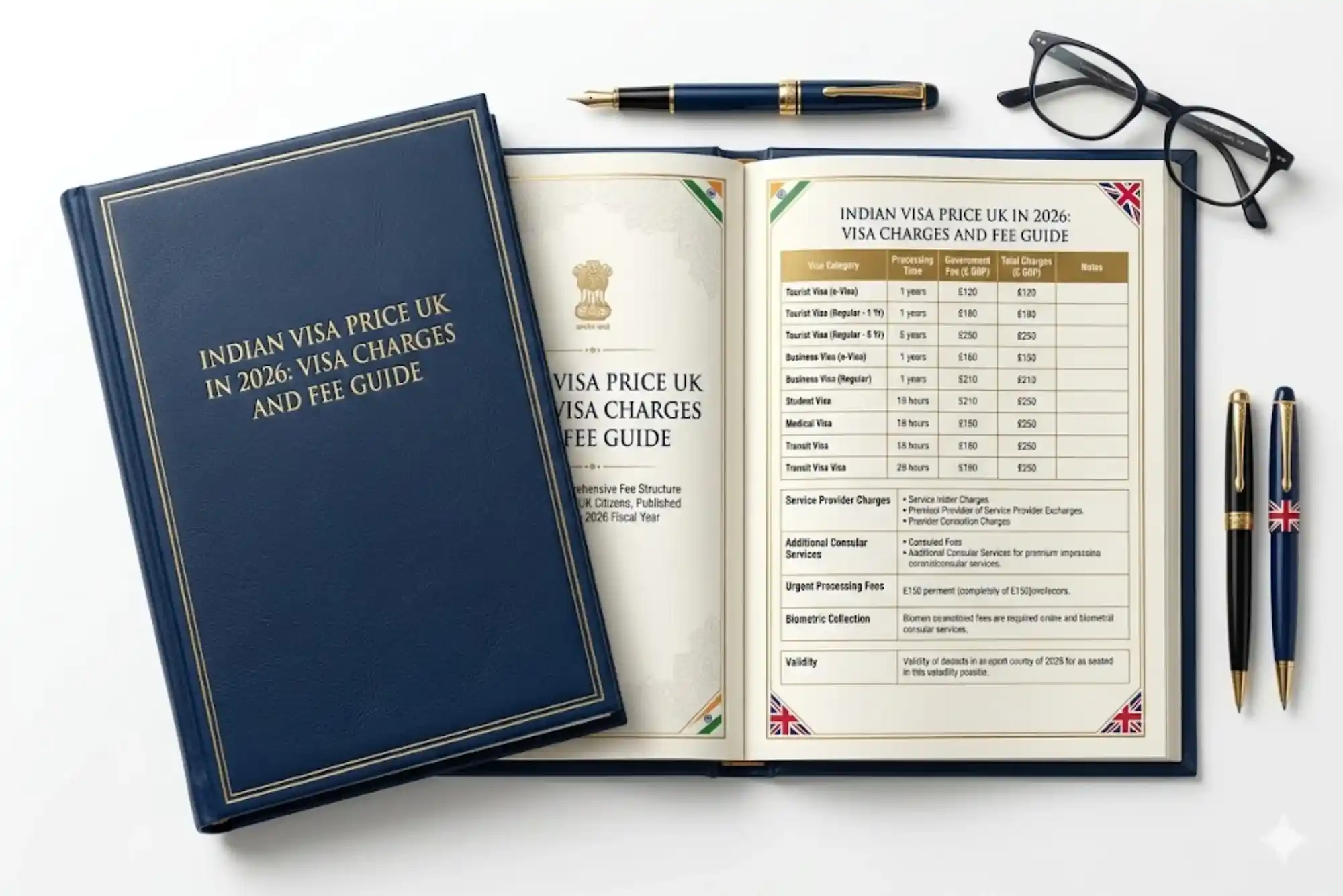
Millions of people travel between the United Kingdom and India every year — for family visits, business meetings, tourism, medical treatment, and study. Despite the strong ties between the two countries, UK nationals and UK residents from other nationalities still require a valid visa to enter India, and the cost of that visa is not always what applicants expect when they first begin researching. The Indian visa price UK in 2026 depends on several factors including the visa category, the duration of stay, the application route, and the nationality of the applicant. This guide covers every fee you are likely to encounter — from the base government charge to VFS service fees, courier costs, and the differences between e-visa and traditional sticker visa applications.
How UK Applicants Can Apply for an Indian Visa
There are two main routes for obtaining an Indian visa from the UK in 2026: the e-visa system available directly through the Indian government’s online portal, and the traditional sticker visa applied for through VFS Global, which is the official outsourcing partner of the Indian High Commission in the UK. Each route has its own fee structure, processing timeline, and eligible visa categories.
The e-visa is the faster, more convenient option and covers tourist, business, medical, and conference categories. It is entirely online and does not require a visit to a visa application center. The traditional sticker visa, processed through VFS, is required for long-duration visits, employment, student, and other categories not covered by the e-visa system, and involves submitting physical documents and your passport to a visa application center.
Indian e-Visa Fees for UK Applicants in 2026
The Indian e-visa fee for UK nationals is set by the Indian government and is paid in USD through the online portal at the time of application. The fee varies depending on the type of e-visa and the duration of stay requested. Below is the current e-visa fee schedule applicable for UK passport holders in 2026.
| e-Visa Category | Duration / Validity | Government Fee (USD) | Approximate GBP |
|---|---|---|---|
| e-Tourist Visa (30 days) | 30 days stay, double entry | $25 | Approx. £20 |
| e-Tourist Visa (1 Year) | 1 year validity, multiple entry | $40 | Approx. £32 |
| e-Tourist Visa (5 Years) | 5 year validity, multiple entry | $80 | Approx. £64 |
| e-Business Visa | 1 year validity, multiple entry | $80 | Approx. £64 |
| e-Medical Visa | 60 days stay, triple entry | $80 | Approx. £64 |
| e-Medical Attendant Visa | Same as patient’s visa | $80 | Approx. £64 |
| e-Conference Visa | Duration of conference | $80 | Approx. £64 |
GBP equivalents are approximate and fluctuate with the USD/GBP exchange rate. The fee is charged in USD regardless of the applicant’s currency. Payment is made by debit or credit card through the official Indian visa online portal. There are no additional service charges for the e-visa route — the government fee is the only charge.
The e-visa is generally processed within 72 hours, though applicants are advised to apply at least four to seven days before travel to allow a buffer. The visa is sent by email as a PDF and must be printed or stored digitally for presentation at the port of entry in India.

Traditional Sticker Visa Fees via VFS Global UK
For visa categories not covered by the e-visa system — including student visas, employment visas, long-term entry visas, journalist visas, and others — applicants must apply through VFS Global in the UK. VFS operates visa application centers in London, Birmingham, and other major UK cities on behalf of the Indian High Commission.
The fee structure for traditional visa applications through VFS involves two separate components: the Indian government visa fee and the VFS service charge. Both are mandatory and non-refundable regardless of the application outcome.
| Visa Category | Indian Government Fee (GBP) | VFS Service Charge (GBP) | Estimated Total (GBP) |
|---|---|---|---|
| Tourist Visa (up to 6 months, single entry) | £96 | £18 – £22 | £114 – £118 |
| Tourist Visa (up to 6 months, multiple entry) | £96 | £18 – £22 | £114 – £118 |
| Tourist Visa (1 Year, multiple entry) | £144 | £18 – £22 | £162 – £166 |
| Business Visa (6 months, single entry) | £96 | £18 – £22 | £114 – £118 |
| Business Visa (Multiple Entry, 1 Year) | £144 | £18 – £22 | £162 – £166 |
| Student Visa | £96 | £18 – £22 | £114 – £118 |
| Employment Visa | £144 | £18 – £22 | £162 – £166 |
| Entry Visa | £96 | £18 – £22 | £114 – £118 |
These figures reflect the standard fee schedule applicable at VFS centers in the UK. Government fees are set by the Indian High Commission and are based on the principle of reciprocity — UK nationals pay different amounts than nationals of other countries applying from the UK. Non-UK nationals applying through VFS in the UK pay fees based on their own passport nationality, not on the UK fee schedule. Always verify current fees directly on the VFS Global UK website or the official Indian visa application portal before submitting, as rates are subject to periodic revision. For current and verified fee information, refer to the official VFS Global India UK portal before booking your appointment.
Additional VFS Charges and Optional Services
Beyond the government fee and standard VFS service charge, applicants using the VFS center route can incur further costs depending on which optional services they choose and how they prefer to receive their passport back after processing.
| Additional Service | Estimated Cost (GBP) | Notes |
|---|---|---|
| Passport Return by Courier (Safeguard) | £7 – £15 | Tracked return; replaces collection in person |
| Premium Lounge Access at VFS Center | £25 – £40 | Comfortable waiting area, dedicated counter |
| Document Scanning at VFS Center | £5 – £10 | For applicants who have not pre-scanned documents |
| Photo Service at VFS Center | £5 – £8 | Compliant passport photos taken on-site |
| Form Filling Assistance | £10 – £20 | Staff help with online application form completion |
| Travel Insurance (sold at VFS) | £15 – £50+ | Optional; not mandatory for India visa |
Most experienced applicants avoid optional add-ons by preparing thoroughly before their VFS appointment — printing documents in advance, taking compliant photos beforehand, and completing the online application form correctly at home. Doing so keeps the total cost close to the base government plus service fee total.
Total Cost Comparison: e-Visa vs VFS Sticker Visa
For applicants who qualify for the e-visa, the cost difference compared to the traditional VFS route is significant. Here is a side-by-side comparison for a UK passport holder applying for a tourist visa.
| Comparison Factor | e-Tourist Visa (1 Year) | VFS Sticker Tourist Visa (1 Year) |
|---|---|---|
| Government Fee | $40 (approx. £32) | £144 |
| Service / Processing Fee | None | £18 – £22 |
| Courier Return | Not applicable (digital visa) | £7 – £15 (optional) |
| Travel to VFS Center | Not required | Variable (travel cost) |
| Processing Time | 72 hours (typically) | 5 – 15 working days |
| Estimated Total | Approx. £32 – £35 | £162 – £181+ |
For the vast majority of UK residents traveling to India for tourism, the e-visa is the more practical and considerably cheaper option. The VFS sticker visa route becomes necessary only when the visit falls outside the e-visa eligible categories or when the duration required exceeds what the e-visa permits.
UK-based travelers who combine their India trip with other destinations may also want to plan their broader travel expenditure carefully. For those looking at long-haul flight options and comparing fares across routes, browsing airline ticket pricing guides can help identify the most cost-effective travel windows for UK departures.
Non-UK Nationals Applying Through VFS in the UK
A commonly misunderstood aspect of the Indian visa system in the UK is how fees apply to non-UK nationals who are legally resident in the UK and applying through VFS here. Indian visa fees are determined by the applicant’s passport nationality, not their country of residence. This means a Pakistani national, an EU national, or an American applying through VFS in the UK will pay the fee applicable to their own passport nationality — which may be different from the UK national fee.
In some cases this works in the applicant’s favor, while in others the reciprocity fee for their nationality may be higher. The VFS service charge, however, is uniform across all applicants using the UK centers regardless of nationality. Applicants should always check the fee applicable to their specific passport before booking an appointment.
Non-UK nationals living in the UK who are planning to visit India may also be researching various aspects of life and travel in the UK before their departure. Those interested in exploring the vibrant cultural and shopping scene in London may find our guide to Camden’s vintage markets and food courts a useful read while planning their time before travel.
Required Documents for Indian Visa Application from the UK
- Valid passport with at least six months of validity beyond the intended date of departure from India, and at least two blank pages
- Completed online visa application form (submitted through the Indian visa application portal before the VFS appointment)
- Recent passport-sized photograph meeting Indian visa specifications (white background, no glasses, face clearly visible)
- Proof of UK residency for non-UK nationals (valid BRP, visa, or residence document)
- Confirmed flight itinerary showing travel to and from India
- Hotel bookings or accommodation confirmation in India
- Bank statement for the last three months demonstrating sufficient funds
- For business visa: invitation letter from an Indian company
- For student visa: offer or admission letter from an Indian educational institution
- For medical visa: letter from an Indian hospital confirming the treatment details
Applicants who have previously traveled to India and have a clean immigration record generally find the process straightforward. First-time applicants or those with unusual circumstances — such as prior visa refusals, extended stays, or travel to certain countries — should allow additional time for processing and consider whether professional immigration advice is warranted before submission.
UK residents who enjoy exploring shopping destinations as part of their travel planning may also find value in browsing shopping price guides for destinations they plan to visit, including India’s diverse retail landscape across cities like Delhi, Mumbai, and Jaipur.
Processing Times for Indian Visa from the UK
| Application Route | Typical Processing Time | Notes |
|---|---|---|
| e-Visa (online) | 72 hours | Apply at least 4 – 7 days before travel as buffer |
| VFS Standard Processing | 5 – 15 working days | Varies by visa type and High Commission workload |
| VFS Urgent Processing (select categories) | 2 – 5 working days | Additional fee applies; not available for all categories |
There is no guaranteed fast-track option for all visa categories through VFS. Applicants with genuinely urgent travel needs — such as a family emergency — should contact the Indian High Commission directly, as consular discretion applies in exceptional circumstances.
Frequently Asked Questions
What is the cheapest Indian visa option for UK nationals in 2026?
The e-tourist visa is the most affordable route for eligible travelers. The 30-day e-tourist visa costs $25 (approximately £20), and the one-year multiple-entry e-tourist visa costs $40 (approximately £32). No VFS service charge or courier fee applies when using the e-visa route, making it significantly cheaper than the traditional sticker visa.
Can non-UK nationals apply for an Indian visa through VFS in the UK?
Yes. Legal residents of the UK who hold non-UK passports can apply for an Indian visa through VFS Global in the UK. The government visa fee is based on the applicant’s passport nationality, while the VFS service charge is uniform for all applicants. Non-UK nationals should confirm their nationality-specific fee before booking an appointment.
Are Indian visa fees refundable if the visa is refused?
No. Both the Indian government visa fee and the VFS service charge are non-refundable in all circumstances, including visa refusals, withdrawal of applications, and cases where the applicant decides not to travel. This makes it especially important to submit a complete and accurate application from the outset.
How long can a UK tourist stay in India on a standard tourist visa?
UK nationals on a sticker tourist visa can stay up to 180 days per visit on a multiple-entry visa valid for one year. The e-tourist visa allows stays of up to 90 days per visit for the one-year and five-year versions, and 30 days for the shorter-term option. The exact permitted stay is indicated on the visa itself and must be adhered to strictly.
Do I need travel insurance to apply for an Indian visa from the UK?
Travel insurance is not a mandatory requirement for standard Indian tourist or business visa applications from the UK. However, it is strongly recommended given that medical costs in India for non-residents can be significant without coverage. VFS centers offer travel insurance products, but applicants can also arrange their own separately at potentially lower cost.
Final Thoughts
The Indian visa price UK in 2026 varies considerably depending on the application route and the visa category chosen. For most tourists and short-stay visitors, the e-visa represents the best value — fast, affordable, and entirely online at a fraction of the cost of the traditional sticker visa route. For those requiring employment, student, or other long-term visas that fall outside the e-visa framework, the VFS route with its higher combined fee is unavoidable. Either way, planning ahead, submitting a complete application, and understanding the full cost picture from the outset ensures a smooth process without unexpected expenses along the way. India remains one of the most rewarding travel destinations in the world, and getting the visa right is simply the first step in what is usually an unforgettable journey.
Related Reading: H-1B Visa Price in 2026: Complete Visa Charges and Fee Guide