
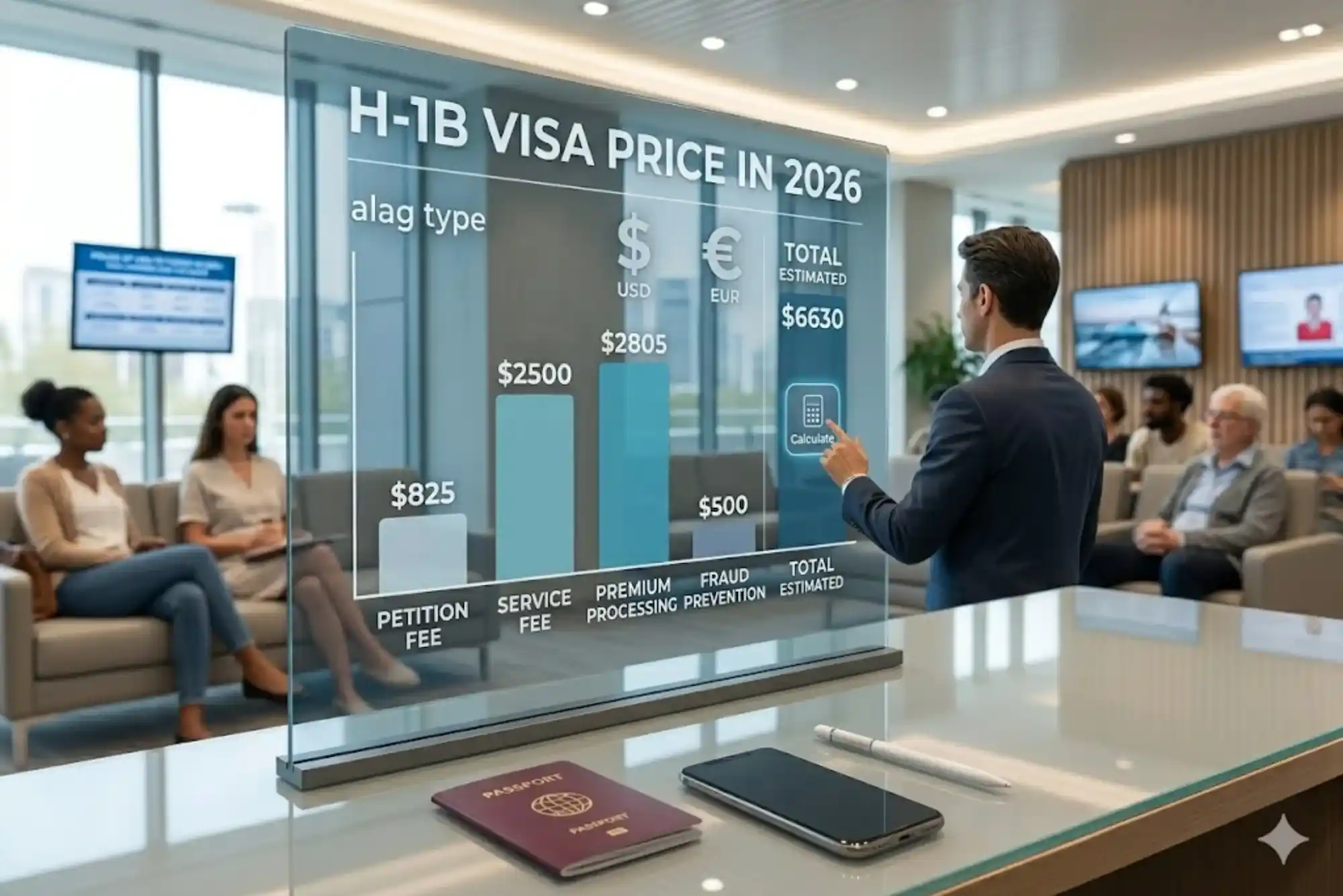
Securing an H-1B visa is one of the most well-known pathways for skilled foreign professionals to work legally in the United States, and understanding its full cost is essential for both employers and applicants planning ahead. The H-1B visa price in 2026 is not a single number — it is a layered structure of government filing fees, mandatory surcharges, optional premium processing, and supporting professional costs that combine into a significant total. Whether you are an employer sponsoring a new hire or a worker navigating the process alongside your company, this guide breaks down every charge you should expect so your planning starts on solid financial ground.
What Is the H-1B Visa?
The H-1B is a non-immigrant work visa that allows US employers to temporarily employ foreign workers in specialty occupations. These are roles that typically require at least a bachelor’s degree or equivalent in a specific field, such as technology, engineering, finance, medicine, architecture, and similar professional disciplines. The visa is issued for an initial period of three years and can be extended for an additional three years, for a maximum of six years under standard conditions.
Each fiscal year, the US government caps the number of new H-1B visas at 65,000 for regular cap applicants, with an additional 20,000 reserved for individuals holding a US master’s degree or higher. Because demand consistently exceeds supply, USCIS uses a lottery system to select petitions for processing, meaning selection is not guaranteed even when all requirements are met.
H-1B Visa Price Overview for 2026
The total H-1B visa price in 2026 is composed of multiple mandatory fees, optional upgrades, and ancillary professional costs. Employers are legally required to pay certain fees and are prohibited from passing specific charges to the employee. Understanding which party bears which cost is as important as knowing the amounts themselves.
| Fee Component | Who Pays | Amount (USD) |
|---|---|---|
| Form I-129 Base Filing Fee | Employer | $730 (small employer) / $730 (large employer) |
| ACWIA Training Fee | Employer | $750 (1–25 employees) / $1,500 (26+ employees) |
| Fraud Prevention and Detection Fee | Employer | $500 |
| Asylum Program Fee (effective 2024+) | Employer | $600 (most employers) / $300 (small employers) |
| Premium Processing (optional) | Employer or Applicant | $2,805 |
| DS-160 Visa Application Fee (consular) | Applicant | $185 |
| SEVIS Fee (if applicable) | Applicant | $350 |
| Attorney Fees (legal representation) | Employer (typically) | $2,000 – $8,000+ |
| Document Translation and Notarization | Applicant | $100 – $500 |
Note that the ACWIA Training Fee and Asylum Program Fee exemptions apply to certain nonprofits, government research organizations, and institutions of higher education. Always verify current fee amounts directly with USCIS before filing, as rates are subject to regulatory adjustment.
Breaking Down the Core H-1B Filing Fees
Form I-129 Base Filing Fee
The I-129 Petition for a Nonimmigrant Worker is the central filing that initiates the H-1B process. The base filing fee is paid by the employer at the time of submission. As of 2026, this fee sits at $730 for most employers, a figure that was revised upward as part of USCIS fee schedule changes that took effect in April 2024. Small employers with 25 or fewer full-time employees and certain nonprofit organizations may qualify for reduced rates.

ACWIA Training Fee
The American Competitiveness and Workforce Improvement Act fee is a mandatory surcharge intended to fund training programs for US workers in fields affected by H-1B employment. The amount depends on the employer’s size: $750 for companies with 25 or fewer full-time equivalent employees, and $1,500 for those with 26 or more. Certain institutions including universities, nonprofit research organizations, and government research entities are exempt from this fee.
Fraud Prevention and Detection Fee
A flat $500 fraud prevention fee is charged on all initial H-1B petitions and petitions involving a change of employer. This fee is not required for extensions with the same employer. It is paid by the employer and cannot be transferred to the worker under any circumstances.
Asylum Program Fee
Introduced as part of the 2024 USCIS fee rule, the Asylum Program Fee helps fund the processing of asylum applications. For most employers, this fee is $600. Employers with 25 or fewer full-time employees pay a reduced rate of $300. Nonprofit organizations are exempt from this fee entirely. This is one of the more recent additions to the H-1B cost structure and catches some employers off guard during initial budget planning.
Premium Processing: Is It Worth the Cost?
Premium processing is an optional service that guarantees USCIS will take action on the petition within 15 business days. Without premium processing, standard adjudication times for H-1B petitions can range from several months to well over a year depending on USCIS workload and the complexity of the case. The fee for premium processing in 2026 is $2,805.
For employers who need a worker to start by a specific date, or for applicants with time-sensitive employment offers, premium processing often justifies the additional cost. It does not guarantee approval, only a faster decision. In cases where additional evidence is requested by USCIS, the 15-business-day clock restarts after the response is submitted.
Some employers cover premium processing as a standard part of their sponsorship package, particularly in competitive hiring markets where speed matters. Others treat it as an optional upgrade that the employee may choose to fund personally, though legally the employer cannot require the employee to pay mandatory filing fees.
Consular Processing Fees for H-1B Applicants Abroad
Applicants who are outside the United States at the time of petition approval, or who are returning to their home country to obtain the visa stamp, must go through consular processing at a US embassy or consulate. This stage involves its own set of fees separate from the USCIS petition fees.
| Consular Fee | Amount (USD) | Notes |
|---|---|---|
| DS-160 Nonimmigrant Visa Application Fee (MRV Fee) | $185 | Paid by applicant; non-refundable |
| Visa Issuance Reciprocity Fee | Varies by nationality | Charged by some countries based on US reciprocity agreements |
| SEVIS Fee (Form I-901) | $350 | May apply if switching from student or other visa status |
The visa issuance reciprocity fee is one of the lesser-known costs in the H-1B process. It is determined by US Department of State reciprocity schedules and varies significantly by nationality. Some nationalities pay no reciprocity fee, while others may pay several hundred dollars. Applicants should check the current reciprocity schedule for their specific country before attending their consular interview. For verified and current fee information, refer to the official US Department of State visa fees page.
Attorney and Legal Representation Costs
While it is technically possible to file an H-1B petition without legal representation, the vast majority of employers work with an experienced immigration attorney. The H-1B process involves detailed documentation, precise language in the Labor Condition Application, and strict compliance with USCIS requirements. A single error can result in a Request for Evidence that delays the case significantly or even leads to denial.
Attorney fees for H-1B cases vary widely based on the firm, the complexity of the occupation, and the scope of services provided. A straightforward petition with a well-established employer in a standard specialty occupation typically costs between $2,000 and $4,000 in legal fees. More complex cases involving unique job duties, non-traditional degree fields, or previous immigration issues can push legal costs to $6,000 or higher.
Employers who sponsor multiple H-1B workers each cycle often negotiate flat-rate or volume pricing with their immigration law firm, which can reduce per-case costs significantly compared to individual case billing.
Total Estimated H-1B Visa Cost in 2026
Combining all mandatory fees, optional premium processing, and typical professional costs, here is a realistic estimate of what the full H-1B process costs in 2026 for a single applicant at a large employer using premium processing and legal representation:
| Cost Component | Estimated Amount (USD) |
|---|---|
| I-129 Base Filing Fee | $730 |
| ACWIA Training Fee (large employer) | $1,500 |
| Fraud Prevention and Detection Fee | $500 |
| Asylum Program Fee (large employer) | $600 |
| Premium Processing Fee | $2,805 |
| DS-160 Visa Fee (consular) | $185 |
| Attorney Fees | $2,500 – $6,000 |
| Document Translation / Notarization | $100 – $400 |
| Reciprocity Fee (varies by nationality) | $0 – $300+ |
| Estimated Total | $8,920 – $13,020+ |
For small employers or nonprofits, the total is considerably lower due to reduced training fees, exemptions from the Asylum Program Fee, and potentially lower legal costs. A small employer without premium processing could complete the process for as little as $4,000 to $6,000 all-in.
Who Pays What: Employer vs. Applicant Responsibility
US law is clear that employers must cover specific H-1B fees and cannot pass them on to the sponsored worker. This is particularly important because violations of these rules can jeopardize the Labor Condition Application and expose the employer to Department of Labor penalties.
- Employer must pay: I-129 filing fee, ACWIA training fee, fraud prevention fee, Asylum Program Fee, and attorney fees related to the petition itself.
- Applicant may pay: DS-160 visa application fee, SEVIS fee, reciprocity fee, personal document preparation costs, and optionally premium processing if the employer agrees or the worker volunteers to cover it.
- Shared or negotiable: Premium processing is often covered by the employer, but workers are legally permitted to pay this voluntarily if they wish to accelerate processing for personal reasons.
Applicants relocating to the United States as part of their H-1B journey often face additional personal expenses beyond the visa process itself. Those managing finances across borders during this transition period may find it useful to review current cost and pricing guides to help plan their overall relocation budget more accurately.
H-1B Processing Timeline and How It Affects Cost
The H-1B cap season opens each April 1st, with petitions submitted for the following fiscal year beginning October 1st. The lottery selection and subsequent processing timeline have a direct impact on cost planning, particularly around premium processing decisions.
| Stage | Typical Timeline | Cost Consideration |
|---|---|---|
| Lottery Registration | March (annual window) | No fee at registration stage |
| Petition Filing (if selected) | April – June | All filing fees due at submission |
| Standard Adjudication | 3 – 12+ months | No additional fee unless RFE issued |
| Premium Processing Decision | 15 business days | Additional $2,805 if selected |
| Consular Processing (abroad) | 2 – 8 weeks post-approval | DS-160 and reciprocity fees apply |
| H-1B Start Date | October 1st (earliest) | No further USCIS fees |
Employers working with multiple international hires across different locations should also factor in travel-related costs that arise when employees attend consular interviews in their home countries. For those planning international travel as part of the broader relocation or visa process, reviewing current airline ticket pricing trends can help build a more complete picture of total relocation expenses.
Common Mistakes That Add Unexpected Cost
Filing errors requiring re-submission: Incomplete or inaccurate petitions lead to Requests for Evidence, which require attorney time and can delay the case by months.
Missing the lottery window: Missing the registration window means waiting an entire year for the next cycle, costing time and opportunity.
Underestimating legal complexity: Unusual job titles, hybrid roles, or applicants without traditional four-year degrees require more detailed documentation and higher legal costs.
Ignoring reciprocity fees: Applicants from countries with visa reciprocity charges are sometimes caught off guard by fees at the consular stage.
Not budgeting for extensions: H-1B extensions after three years carry their own filing fees, which employers should factor into long-term sponsorship cost planning.
Workers who are already based in the US and exploring options beyond the H-1B category, or those considering transitions to other work arrangements, may benefit from reviewing business and professional guidance resources to understand the broader landscape of options available to them.
Frequently Asked Questions
What is the minimum H-1B visa cost an employer must pay in 2026?
For a small employer (25 or fewer employees) filing without premium processing and using in-house preparation, the minimum mandatory government fees total approximately $1,750 to $2,350. This includes the base filing fee, reduced ACWIA fee, fraud prevention fee, and reduced Asylum Program Fee. Attorney costs are additional.
Can an employer require the H-1B worker to pay any filing fees?
No. Employers are legally prohibited from requiring workers to pay mandatory government filing fees such as the I-129 base fee, ACWIA training fee, fraud prevention fee, or Asylum Program Fee. Requiring workers to pay these fees violates Department of Labor regulations and can result in penalties and debarment from the H-1B program.
Does premium processing guarantee H-1B approval?
No. Premium processing guarantees that USCIS will adjudicate the petition within 15 business days, meaning they will either approve, deny, or issue a Request for Evidence within that window. It does not improve the chances of approval or override substantive eligibility requirements.
Are H-1B fees refundable if the petition is denied?
USCIS filing fees are generally non-refundable regardless of the outcome, including in cases of denial or withdrawal. Premium processing fees may be refunded in limited circumstances if USCIS fails to meet the 15-business-day processing window, though this is handled on a case-by-case basis.
What fees apply when extending an H-1B visa?
H-1B extensions with the same employer require the I-129 filing fee and the fraud prevention fee is waived. The ACWIA fee and Asylum Program Fee also apply to extensions in most cases. Extensions do not require re-entering the lottery, which simplifies the process considerably compared to the initial cap-subject petition.
Final Thoughts
The H-1B visa price in 2026 represents a substantial investment for employers and a carefully managed expense for the workers they sponsor. With mandatory government fees alone exceeding $3,300 for large employers, and total costs including legal representation often reaching $10,000 or more per petition, accurate budgeting is essential from the start. Knowing exactly which fees fall on the employer, which the applicant may bear, and where optional upgrades like premium processing add genuine value helps both sides navigate the process with confidence. For anyone planning an H-1B petition in 2026, early preparation, a clear understanding of fee structures, and experienced legal guidance are the three factors most likely to keep costs predictable and the process on track.
Related Reading: Indian Visa Price UK in 2026: Complete Visa Charges and Fee Guide
Related Reading: Gold Visa USA Price in 2026: Visa Charges and Fee Guide