
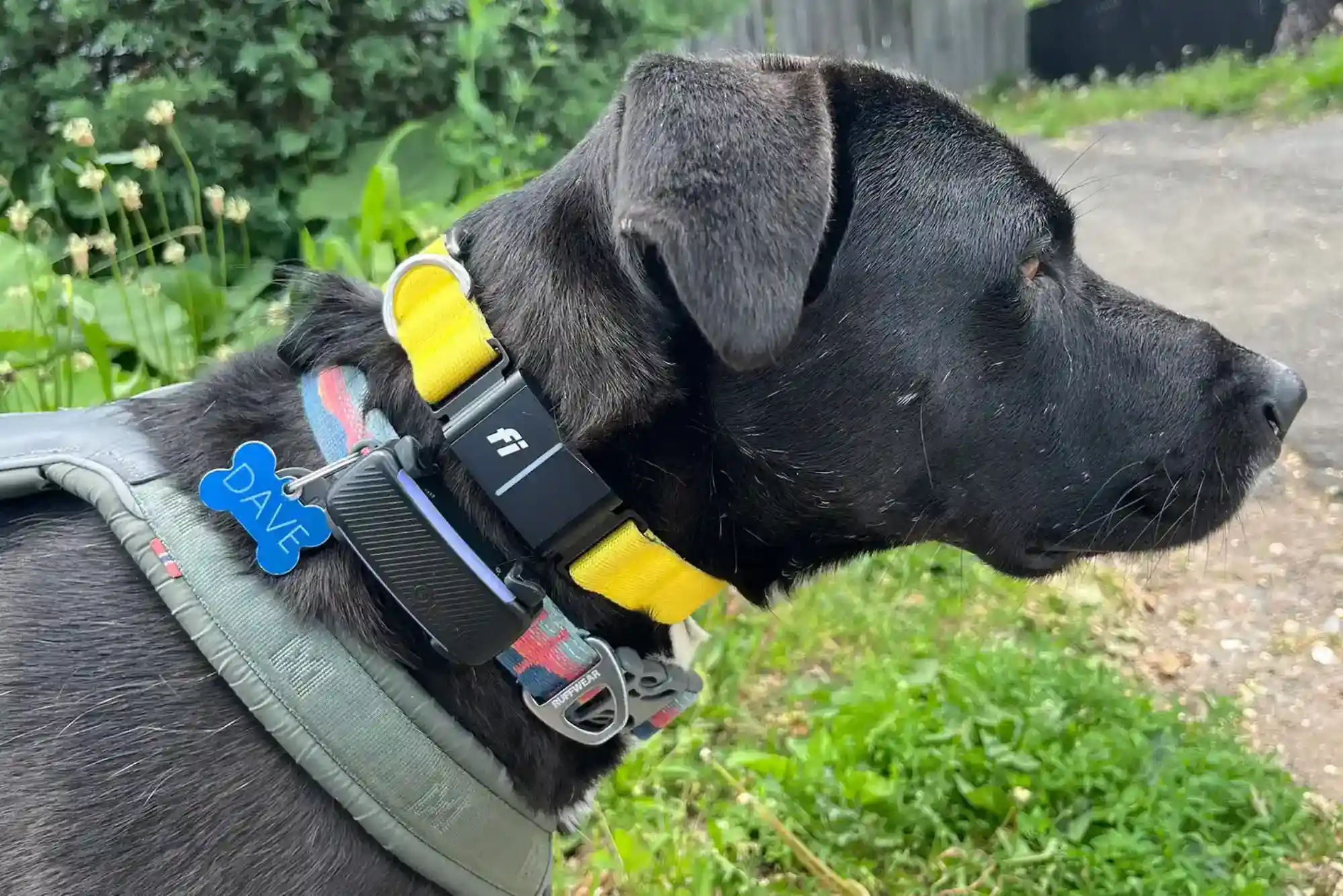
Introduction
Traveling with a dog is exciting, but unfamiliar places can create unexpected risks. A door opens at a hotel, a leash slips at a rest stop, or a curious dog follows a scent on a hiking trail. In those moments, knowing your dog’s location can make the difference between a short search and a frightening ordeal.
That is why choosing the best GPS dog trackers for traveling deserves more attention than simply picking the device with the highest rating. Cellular GPS trackers, Bluetooth tags, and satellite or radio-based systems work very differently. The best choice depends on where you travel, whether cellular service is available, how long you need the battery to last, and whether you need true live tracking.
Modern cellular trackers generally determine a pet’s position using GPS satellites and then transmit that location through cellular networks. For example, Tractive explains that its trackers use GPS for positioning and cellular networks for communication with the owner’s app.
For most road trips and international vacations, a cellular tracker is the most practical starting point. However, Bluetooth can be useful as a lightweight backup, while dedicated satellite or radio systems become much more valuable in remote areas where mobile coverage disappears.
How GPS Dog Trackers Work While Traveling
The phrase “GPS dog tracker” can be misleading because GPS itself only determines location. It does not automatically send that location to your phone.
A tracker first needs to calculate where your dog is using signals from navigation satellites. It then needs another communication method to deliver that information to you. Depending on the product, that second step may use cellular networks, Bluetooth, Wi-Fi, or a dedicated radio connection.

This distinction becomes extremely important during travel.
A cellular tracker can provide long-distance tracking as long as the device has access to a compatible mobile network. Tractive, for instance, states that its trackers can operate across more than 175 countries where sufficient cellular coverage exists.
A Bluetooth tracker takes a different approach. Devices such as an AirTag rely on nearby compatible devices to help report their location. That can work remarkably well in busy cities, airports, and populated neighborhoods, but it is not the same as continuous GPS tracking.
Dedicated Garmin systems provide another option for serious outdoor users. Garmin’s Alpha LTE combines cellular tracking with compatibility with traditional VHF dog-tracking systems, allowing users to use LTE where available and VHF tracking as an additional option.
Cellular GPS Dog Trackers for Travel
For the majority of travelers, cellular GPS is the most balanced technology.
A cellular tracker typically contains a GPS receiver and an integrated cellular connection. The GPS component determines your dog’s position, while the cellular connection sends that information to your smartphone.
This means your dog does not need to remain close to you. If your dog runs several miles away but remains within cellular coverage, you may still be able to see the location through the tracking app.
Why Cellular Trackers Are Good for Road Trips
Road trips create exactly the type of situation where cellular tracking makes sense. You may stop at a rest area, campground, unfamiliar town, or roadside park. Your dog can become disoriented quickly in a new environment.
A cellular tracker can provide location history, escape alerts, geofencing, and live tracking depending on the model. Tractive, for example, offers virtual fences and live tracking, with its live mode providing updates every few seconds under suitable conditions.
Battery management remains important. Frequent live tracking consumes more power, so a tracker that lasts several days under normal use may need considerably more frequent charging during an active trip.
Best Cellular Option for International Travel
International travelers should pay close attention to network compatibility rather than assuming a tracker will work everywhere.
A device that works perfectly in your home country may have limited functionality abroad if its cellular service does not support roaming or local networks. Tractive is particularly notable for international travel because the company says its service operates across more than 175 countries where cellular coverage is available.
That makes a cellular tracker such as Tractive a strong choice for travelers crossing borders with their dogs. It is especially useful when your itinerary includes multiple countries and you do not want to replace the tracking system each time you cross a border.
Bluetooth Dog Trackers for Travel
Bluetooth trackers are inexpensive, compact, and convenient, but they should be understood as a different category of technology.
The major advantage is simplicity. A Bluetooth tag can be attached to a collar without the recurring cellular subscription required by many real-time GPS services. Apple’s AirTag is a familiar example. It can use the Find My network to report its approximate location when it comes within range of compatible Apple devices.
This makes Bluetooth tracking particularly useful in populated areas.
Imagine your dog slips away near a busy hotel or city park. Other people’s phones may detect the Bluetooth tracker and anonymously relay its location through the network. In that situation, a small tag can be surprisingly helpful.
The limitation becomes obvious in remote environments. If your dog disappears into an isolated forest, desert, mountain trail, or rural area where compatible devices are scarce, a Bluetooth tag may provide little or no useful location information.
That is why a Bluetooth tracker should generally be considered a backup rather than a replacement for a true cellular or off-grid tracking system when traveling.
Satellite and Radio Tracking for Remote Adventures
The term “satellite tracker” deserves special attention because many products marketed for remote dog tracking do not actually transmit your dog’s location directly through satellites.
Some advanced systems use GPS or other GNSS satellites to determine position and then communicate through radio or cellular networks. Garmin’s traditional dog-tracking systems, for example, use VHF radio between the handheld device and the dog’s collar.
This can be extremely valuable in places where there is no mobile service.
When Off-Grid Tracking Makes More Sense
If your travel plans involve hunting, remote hiking, wilderness camping, or large areas without reliable cellular coverage, a dedicated radio-based system may outperform a cellular tracker.
A cellular tracker can be excellent until the network disappears. A radio system does not depend on a cell tower between you and the dog. Its range is affected by terrain, obstacles, antenna positioning, and line of sight, but it can remain useful in genuine dead zones.
Garmin’s Alpha LTE illustrates the advantage of combining technologies. It can operate through LTE where cellular service is available and integrate with compatible VHF tracking equipment for additional coverage options.
For serious backcountry travel, that redundancy can be more important than having the smallest or cheapest tracker.
Cellular vs. Bluetooth vs. Satellite: Which Is Best?
There is no universal winner because each technology solves a different problem.
Cellular is usually the best choice when you want convenient live tracking through your phone. It is particularly suitable for road trips, vacations, urban travel, and international journeys where cellular coverage is available.
Bluetooth is better suited to everyday backup protection, especially in cities and populated areas. Its low cost and small size make it attractive, but its dependence on nearby devices makes it unsuitable as the only tracker for remote adventures.
Dedicated radio or satellite-supported systems are more appropriate when your dog may travel beyond cellular coverage. They tend to be more specialized, more expensive, or bulkier, but that tradeoff can be worthwhile for wilderness travel.
The important point is that the best GPS dog tracker for traveling is the one that matches the environment where you expect to use it.
What to Look for in a Travel Dog Tracker
Battery life should be near the top of your buying criteria. A tracker that needs charging every couple of days requires more planning during a long trip. Heavy live-tracking use can reduce battery life further, so advertised maximum battery life should never be treated as a guaranteed travel runtime.
Coverage is equally important. Before leaving home, check whether the tracker supports the countries and networks on your itinerary. International compatibility can vary significantly between services.
The tracker’s physical size matters too. A large device may be perfectly comfortable for a Labrador but excessive for a small dog. Weight, collar attachment, waterproofing, and durability should all match your dog’s size and activity level.
You should also consider how quickly the app updates location. A tracker that updates every several minutes may be perfectly adequate for general monitoring but less useful when you are actively chasing a dog that is running away.
Geofencing is another valuable travel feature. You can create a safe zone around a hotel, campsite, vacation rental, or other location. If your dog leaves that area, the app can alert you.
Finally, consider the subscription. Many cellular trackers require an ongoing plan because the service pays for mobile connectivity, cloud infrastructure, and app functionality. GPS satellites themselves do not require a subscription, but transmitting the location from the tracker to your phone often does.
How to Use a GPS Dog Tracker Safely on a Trip
Do not wait until your vacation begins to test the tracker.
Attach it to your dog’s collar several days before departure and learn how the app behaves. Check the battery percentage, test location updates, create a safe zone, and confirm that escape notifications actually reach your phone.
During travel, keep the device charged whenever possible. A power bank can be particularly useful on road trips and camping excursions.
It is also smart to keep your dog’s identification tag and microchip information up to date. A GPS tracker helps you locate your dog, but a microchip serves a different purpose. A microchip does not provide live location information; it helps identify an animal when a veterinarian, shelter, or other authorized professional scans it.
For air travel, follow the airline’s specific requirements and make sure any tracking device is used in a way that complies with the airline’s rules. A tracker is a safety tool, not a substitute for a properly secured carrier or approved travel setup.
Are GPS Dog Trackers Worth It for Traveling?
For many travelers, absolutely.
The value becomes especially obvious when you consider how quickly a familiar dog can become lost in an unfamiliar environment. Your dog may not recognize the route back to a hotel, campground, rental property, or rest stop.
A tracker cannot prevent an escape, but it can reduce the time between losing sight of your dog and locating them.
Current tracking technology also offers more than simple location. Some cellular systems provide activity monitoring, health-related information, virtual fences, location history, and alerts. Tractive, for example, combines GPS location with activity and wellness features in its app.
The key is choosing technology based on your actual travel environment rather than buying the most expensive device available.
Choose the Tracker Around Your Trip
The best GPS dog trackers for traveling are not necessarily the most expensive ones. The right choice depends on where your dog will be and what kind of connection you can realistically expect.
For road trips, hotels, cities, and international vacations, a cellular GPS tracker is usually the most practical option. For an inexpensive backup in populated areas, Bluetooth can be useful. For serious wilderness travel where cellular networks cannot be trusted, a dedicated radio-based system offers an important advantage.
Before your next trip, check your destination’s cellular coverage, test your tracker at home, charge it fully, and make sure your dog’s identification information is current. A few minutes of preparation can make a major difference if your dog ever gets separated from you.
FAQs
What is the best GPS tracker for dogs?
The best GPS tracker for dogs depends on where and how you travel. Cellular trackers are generally the strongest all-around choice for road trips and international travel because they can provide long-distance location updates wherever compatible cellular coverage exists. For remote areas without cellular service, a dedicated radio-based system can be more appropriate.
How accurate are GPS dog trackers?
GPS dog trackers can usually provide location information accurate to within several meters under favorable conditions, but accuracy varies with satellite visibility, buildings, dense vegetation, terrain, and the specific device. GPS should be viewed as a tool for locating your dog rather than a guarantee of pinpoint accuracy.
Do GPS dog trackers require a subscription?
Not all trackers require a subscription. Bluetooth and some radio-based systems can operate without a recurring cellular service fee. However, many cellular GPS trackers require a subscription because they need mobile connectivity and supporting cloud services to send location data to your phone.
Can GPS dog trackers be used internationally?
Some can, but international support varies considerably. Before traveling abroad, check the manufacturer’s supported countries and cellular coverage. Tractive states that its trackers can operate in more than 175 countries where adequate cellular coverage is available.
What is the range of a GPS dog tracker?
A cellular GPS tracker does not have a simple fixed range like a Bluetooth device. Its effective range depends primarily on cellular coverage. A dedicated radio tracker has a more defined communication range, which can be affected by terrain and line of sight. Bluetooth trackers generally have much shorter direct ranges and may rely on nearby devices to report a location.
Can I track my dog without a GPS tracker?
Yes, but alternatives have important limitations. A microchip can help identify a lost dog after it has been found, while Bluetooth tags can help locate pets in areas with compatible devices. Neither provides the same type of continuous long-distance tracking as a cellular GPS tracker.
Can you put a tracking device on a dog?
Yes. Most pet trackers are designed to attach to a collar or come as part of a dedicated tracking collar. The device should be appropriately sized for the dog and securely attached without causing rubbing, excessive weight, or discomfort.