
Introduction
Taking your dog for a car ride can be one of the simplest joys of pet ownership, but an unsecured dog can become a serious safety risk during sudden braking or a collision. That is why choosing the right dog seat belts and crash-tested car hammocks matters far more than simply buying a product labeled “pet safety.”
A proper restraint should help keep your dog from being thrown around the vehicle while also reducing the chance that the dog becomes a projectile that can injure passengers. However, not every dog seat belt has been crash tested, and a hammock that protects your seats from hair and muddy paws should not automatically be treated as a crash-protection device.
The Center for Pet Safety (CPS), an independent nonprofit focused on companion-animal travel safety, has repeatedly highlighted the difference between marketing claims and independently evaluated safety performance. Its research has also shown why the strength of a harness alone is not enough; the complete restraint system needs to control the dog’s movement during a crash.
For everyday driving, the goal is simple: keep your dog appropriately restrained, keep the restraint connected to a suitable attachment point, and avoid assuming that a product is crashworthy simply because its packaging says “tested.”
Why Backseat Safety Matters for Dogs
Dogs are vulnerable passengers because they are not protected by the same restraint systems designed for human occupants. During a sudden stop, an unrestrained dog can continue moving forward because of inertia.
Even a relatively small dog can generate substantial force when its body is suddenly stopped. A larger dog can become an especially dangerous projectile in a serious collision, potentially striking the front seats or passengers.

There is another problem that is easy to overlook. A loose dog may interfere with the driver, move between seats, climb into the front passenger area, or attempt to get onto the driver’s lap. These behaviors can create distractions even when no crash occurs.
Keeping your dog in the back seat and using an appropriate restraint creates a more controlled environment. CPS specifically recommends securing pets in the back seat and using products that have undergone its certification process rather than relying on extension tethers or similar devices.
What Makes a Dog Seat Belt Safe?
A dog seat belt is not simply a short strap with a clip. The safety of the system depends on how the restraint interacts with the dog’s body, the harness, and the vehicle.
Use a Properly Designed Harness
One of the most important considerations is where the restraint attaches to your dog. A crash restraint should generally connect to a suitable safety harness rather than a standard collar.
A collar is designed primarily for identification and everyday walking control. It is not designed to distribute crash forces across a dog’s body. CPS has specifically warned that collars and ordinary walking harnesses are not appropriate connection points for pet travel products intended to provide crash protection.
A purpose-built automotive harness is designed with travel restraint in mind. Look for information about the specific harness model, tested size, testing method, and manufacturer instructions rather than relying on vague statements such as “heavy duty” or “maximum strength.”
Look Beyond the Words “Crash Tested”
“Crash tested” is one of the most important phrases to examine carefully.
A manufacturer may have conducted testing, but that does not automatically mean every size of the product has demonstrated the same performance. CPS has previously noted that some manufacturers tested only one size while marketing the product across multiple dog sizes. It has also distinguished tensile or strength testing from actual dynamic crash testing.
That distinction matters because a restraint can be extremely strong when pulled in a controlled direction but still behave differently during a real crash scenario.
Independent certification provides another level of information. CPS maintains a database of products that have undergone its own testing and certification process, allowing pet owners to examine certified products rather than relying solely on advertising language.
Are Car Hammocks Safe for Dogs?
A car hammock can be useful, but its purpose needs to be understood correctly.
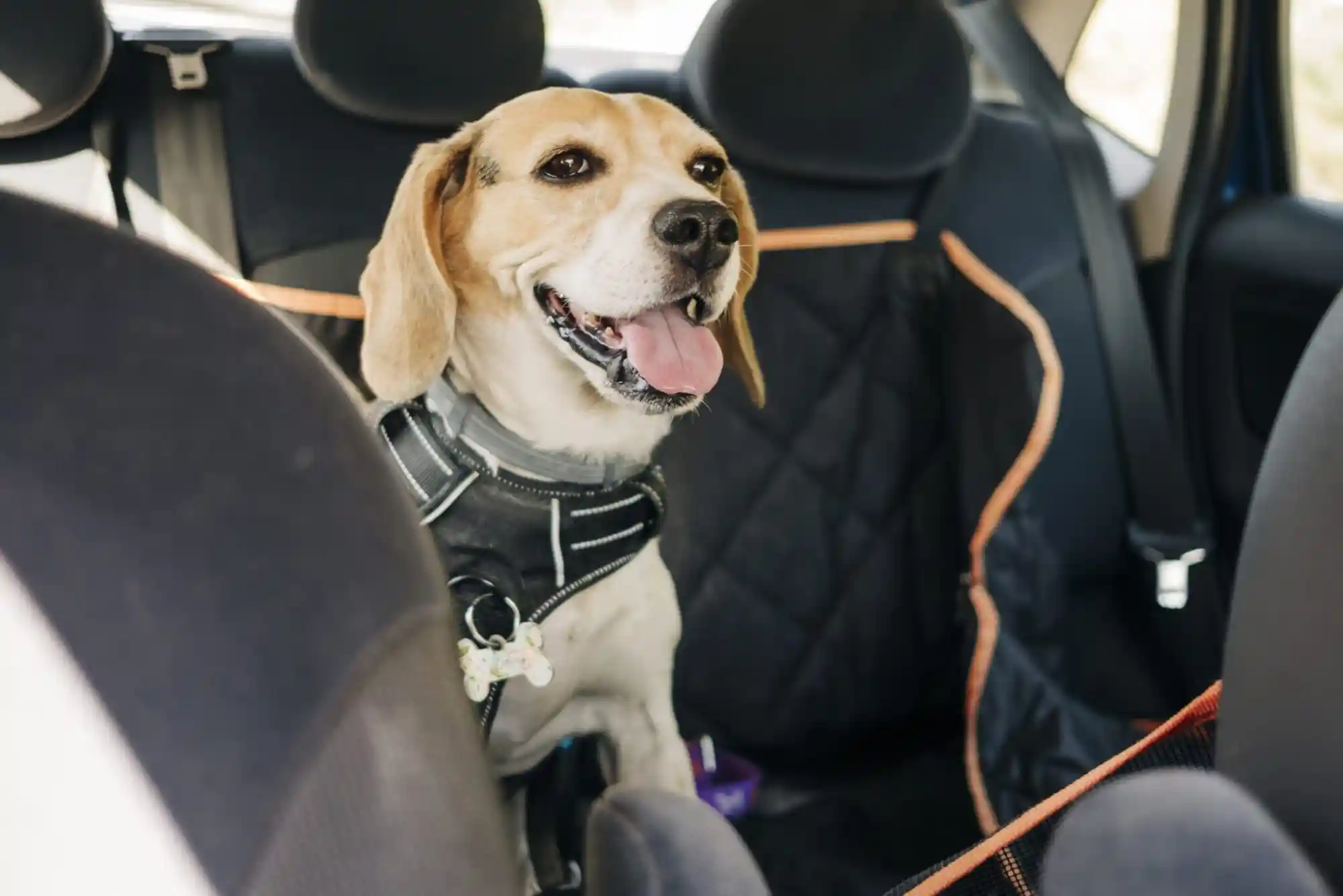
A typical backseat hammock stretches between the front and rear headrests, creating a covered area that can help prevent a dog from falling into the footwell. It can also protect the vehicle’s seats from dirt, hair, scratches, and accidents.
However, a hammock by itself should not automatically be considered a crash restraint.
The fabric may create a barrier across the back seat, but that does not necessarily mean it can withstand the forces produced by a collision. A hammock can also allow a dog to move across a larger area of the seat unless the dog is separately restrained.
This is why dog seat belts and crash-tested car hammocks should not be treated as interchangeable products. A hammock is primarily a containment and seat-protection accessory unless the specific product has independently demonstrated crash-protection performance.
The Best Setup Combines Containment With Restraint
For many dogs, a practical backseat arrangement involves a properly fitted automotive harness connected to an appropriate restraint system while a hammock provides a protected surface underneath.
This combination can help prevent the dog from moving into the footwell while the harness and restraint limit forward movement.
The important point is that the hammock should not become the only thing stopping the dog during a collision.
What Does Crash Testing Actually Mean?
Crash testing attempts to recreate the forces and movement that occur during a vehicle collision. In pet-safety research, specialized canine test models can be used instead of live animals.
CPS has conducted crash testing using specially designed crash-test dog models. Its early pilot study used a 55-pound test dog and simulated a 30-mph frontal crash. The study found that the restraints tested at that time failed to adequately protect the dog and human occupants.
This research helped demonstrate why simply attaching a dog to a vehicle is not enough.
CPS later developed more detailed testing approaches, including preliminary strength testing followed by crash testing. Importantly, CPS explains that passing a preliminary strength test does not itself demonstrate crash protection. A restraint also needs to control the dog’s movement during the crash.
That is an important distinction for shoppers.
A product can be strong without being crashworthy.
How to Choose the Right Dog Seat Belt
Start with your dog’s size, body shape, and weight. A restraint should fit correctly without being so loose that the dog can escape or so tight that it restricts normal breathing and movement.
Next, examine the attachment system. Avoid assuming that every universal seat-belt clip is equally suitable. The connection between the vehicle, restraint, and harness is part of the safety system.
Read the manufacturer’s instructions carefully. If the manufacturer specifies a particular attachment method, follow it rather than improvising with additional straps or connectors.
It is also worth checking whether the exact size of the harness was tested. A crash-test result for one size should not automatically be interpreted as proof that every other size performs identically.
Finally, check for independent certification or detailed testing documentation. Independent testing is more informative than a product page that simply uses phrases such as “premium safety,” “military strength,” or “crash proof.”
Why Extension Tethers Can Be Dangerous
Extra-long tethers may seem attractive because they give dogs more freedom to move around the back seat. However, more movement is not necessarily safer.
CPS currently warns against extension tethers and zipline-style systems because they can allow excessive movement during a crash. According to CPS, the resulting motion can increase forces on the dog’s body and potentially contribute to serious injuries.
This is a useful reminder that comfort and crash protection are not always the same thing.
A dog may enjoy having more room to move during an ordinary trip, but unrestricted movement can become a disadvantage when the vehicle suddenly decelerates.
Common Mistakes Pet Owners Make
One common mistake is connecting a restraint directly to a dog’s collar. This can place dangerous forces around the neck during sudden deceleration.
Another mistake is assuming that a hammock automatically keeps a dog safe. A hammock can create a useful barrier, but it is not necessarily a crash restraint.
Some owners also purchase a restraint without checking whether it fits their particular dog. An improperly fitted harness may allow a dog to slip out or move excessively.
Another mistake is adding aftermarket extensions to a restraint system. CPS specifically warns that extension tethers can undermine the protective performance of an otherwise suitable harness.
Perhaps the biggest mistake is trusting the phrase “crash tested” without asking what was actually tested, which size was tested, and who performed the testing.
How to Use a Dog Seat Belt Correctly
Before every trip, check that the harness is properly fitted and that the restraint is securely connected according to the manufacturer’s instructions.
Your dog should remain in the back seat rather than riding in the front passenger seat. Keep the restraint short enough to control unnecessary movement without creating uncomfortable tension during normal driving.
Avoid letting your dog ride with its head outside the window. Apart from debris and weather exposure, sudden movement can create additional risks.
It is also a good idea to inspect the harness and restraint regularly. Look for frayed webbing, damaged stitching, bent hardware, worn clips, or other signs of deterioration.
After a significant collision, replace the restraint unless the manufacturer specifically provides instructions confirming that it remains safe to use. Crash forces can damage components that are not visibly broken.
Dog Seat Belts vs. Car Hammocks: Understanding the Difference
The simplest way to think about the two products is that they solve different problems.
A dog seat belt or automotive restraint is intended to limit the dog’s movement. A car hammock is primarily designed to create a contained backseat area and protect the vehicle interior.
A hammock can therefore complement a restraint, but it should not automatically replace one.
When evaluating dog seat belts and crash-tested car hammocks, pay attention to what each product has actually been designed and tested to do. The safest choice is based on evidence rather than the number of features shown on the packaging.
CPS maintains publicly available research and certified-product information, making it a useful starting point for pet owners who want to investigate safety claims.
FAQs
Are dog seat belts actually safe?
A properly designed and appropriately tested canine restraint can reduce a dog’s movement during vehicle travel. However, not every product sold as a dog seat belt has demonstrated crash protection. Look for detailed testing information and independent certification rather than relying solely on marketing claims.
Is it better for a dog to wear a harness or a seat belt in the car?
For vehicle travel, the harness and restraint work together. A suitable automotive harness provides the body connection, while the vehicle restraint limits movement. A standard collar should not be used as the primary crash-restraint connection.
Are dog car hammocks safe in an accident?
A standard car hammock should not automatically be considered crash protection. Its primary benefits are containment and protection of the vehicle interior. Unless a specific hammock has been independently tested for crash performance, use an appropriate restraint system as well.
What is the safest place for a dog to ride in a car?
The back seat is generally the preferred location for a restrained dog. CPS specifically advises securing pets in the back seat rather than allowing them to travel unsecured.
Can I use a regular walking harness with a dog seat belt?
A regular walking harness should not automatically be treated as a crash-tested automotive harness. CPS has warned that walking harnesses and collars are not suitable connection options for crash-safety applications.
Do crash-tested dog seat belts really work?
Crash testing can provide useful evidence about how a restraint performs under specified conditions, but results depend on the particular product, size, test protocol, and installation method. This is why independent test information is more useful than a generic “crash tested” claim.
How long should a dog seat belt be?
There is no single ideal length for every dog or vehicle. The restraint should provide enough movement for the dog to sit or lie comfortably while preventing excessive forward or lateral travel. Follow the manufacturer’s fitting instructions rather than choosing a length solely for maximum freedom.
Can my dog ride in the front seat with a seat belt?
The back seat is generally the safer location for a restrained dog. Front-seat airbags are designed for human occupants and can create additional danger for pets during a collision. Keeping your dog secured in the rear passenger area also reduces driver distraction.
Choosing between dog seat belts and crash-tested car hammocks should begin with one question: what does the product actually protect against?
A hammock can keep your dog from slipping into the footwell and protect your upholstery. A suitable automotive harness and restraint can limit movement. Independent crash testing can provide evidence about whether a product performs as claimed.
The safest approach is to avoid confusing convenience features with crash protection. Look for independently evaluated products, use the correct harness and attachment method, keep your dog in the back seat, and avoid extension tethers that have not been demonstrated to provide safe crash performance. CPS’s research makes clear that strength alone does not establish crash protection.