Introduction
Traveling by train with a pet can be easier than flying, but every railway has its own rules. Understanding those rules before departure can prevent delays, rejected boarding, or unnecessary stress for you and your animal. This guide to Pet-Friendly Train Travel: Amtrak, Eurostar, and UK Rail Policies Explained covers the main requirements travelers should know before booking.
Amtrak in the United States generally permits small dogs and cats on eligible trips. Eurostar has different rules depending on whether you are traveling to London or between continental European destinations. Meanwhile, UK rail services are generally welcoming to dogs, cats, and other small domestic animals.
Therefore, pet owners should check the route, carrier requirements, travel duration, and documentation before purchasing tickets. A little preparation can make the entire journey much smoother.
Pet-Friendly Train Travel: Amtrak, Eurostar, and UK Rail Policies Explained
The biggest difference between these rail networks is how broadly they allow ordinary pets. Amtrak permits small dogs and cats under specific conditions. Most UK rail services allow up to two pets without an additional charge. Eurostar is more restrictive, particularly on services connecting London with continental Europe.
These differences matter because a pet-friendly train does not necessarily mean every train, route, or carriage accepts animals. A policy can also distinguish between ordinary pets and guide or assistance animals.
For that reason, Pet-Friendly Train Travel: Amtrak, Eurostar, and UK Rail Policies Explained should always be considered route-specific. Checking the operator’s latest requirements before departure is an essential part of planning.

Amtrak Pet Travel Rules
Amtrak allows small dogs and cats on many eligible services. The combined weight of the pet and carrier must not exceed 20 pounds. The animal must also remain inside an approved carrier throughout the journey.
The carrier can be hard-sided or soft-sided. However, it must be leak-proof and adequately ventilated. The maximum permitted carrier size is 19 inches long, 14 inches wide, and 10.5 inches high. Your pet must have enough room to sit and lie down comfortably.
Amtrak generally limits pet journeys to seven hours. Importantly, this seven-hour limit includes transfer time on multi-segment journeys. Therefore, travelers should calculate the complete trip rather than looking only at individual train times.
Reservations are required for pets, and the number of pet reservations is limited. Generally, one pet is permitted per customer. Pet travel is available in designated seating areas, while restrictions apply to food-service cars, sleeping accommodations, and certain premium seating areas.
Because Amtrak rules can vary by route, checking the specific train is especially important. Some services have additional restrictions or do not accept pets at all.
Preparing Your Dog or Cat for Amtrak
Before traveling, allow your pet to become comfortable with the carrier. A familiar carrier can reduce anxiety during a long journey. Place a familiar blanket inside if appropriate, while avoiding anything that could interfere with ventilation.
It is also sensible to exercise your dog before boarding. For cats, provide a quiet period before entering the station. Keep essential supplies accessible, including water, treats, waste bags, and cleaning materials.
Amtrak’s pet policy is designed around small animals that remain contained throughout the journey. Therefore, a pet that cannot comfortably remain in its carrier may not be suitable for this type of travel.
Eurostar Pet Travel Rules
Eurostar requires particularly careful planning because ordinary pet rules depend on the route. Pets are not permitted on Eurostar services to and from London. They are also restricted on certain routes involving Lille and on Eurostar Sun and Snow services.
However, ordinary pets are allowed on eligible Eurostar services between Belgium, France, Germany, and the Netherlands. Small domestic animals weighing less than 6 kilograms can travel free when placed inside a carrier. The maximum carrier size is 45 by 30 by 25 centimeters.
Larger dogs that cannot fit inside the required carrier can travel under Eurostar’s dog fare on eligible continental routes. Eurostar states that this fare is €30. Larger dogs must remain leashed and muzzled and travel on the owner’s lap or on the coach floor.
Eurostar does not permit dangerous dogs, wild animals, or birds on its ordinary pet services. Therefore, travelers should never assume that a standard household pet will automatically qualify.
Traveling to London With an Assistance Animal
The rules are different for guide and assistance animals. Eurostar permits qualifying guide and assistance dogs and cats on London routes, but advance arrangements are required.
Passengers traveling to or from London should contact Eurostar at least 24 hours before departure. Documentation, vaccination requirements, and border-control rules also apply. Eurostar advises passengers to arrive at least 60 minutes before departure for document checks.
This distinction is important when researching Pet-Friendly Train Travel: Amtrak, Eurostar, and UK Rail Policies Explained. A railway may prohibit ordinary pets while still accepting qualifying assistance animals under separate accessibility rules.
UK Rail Pet Policies
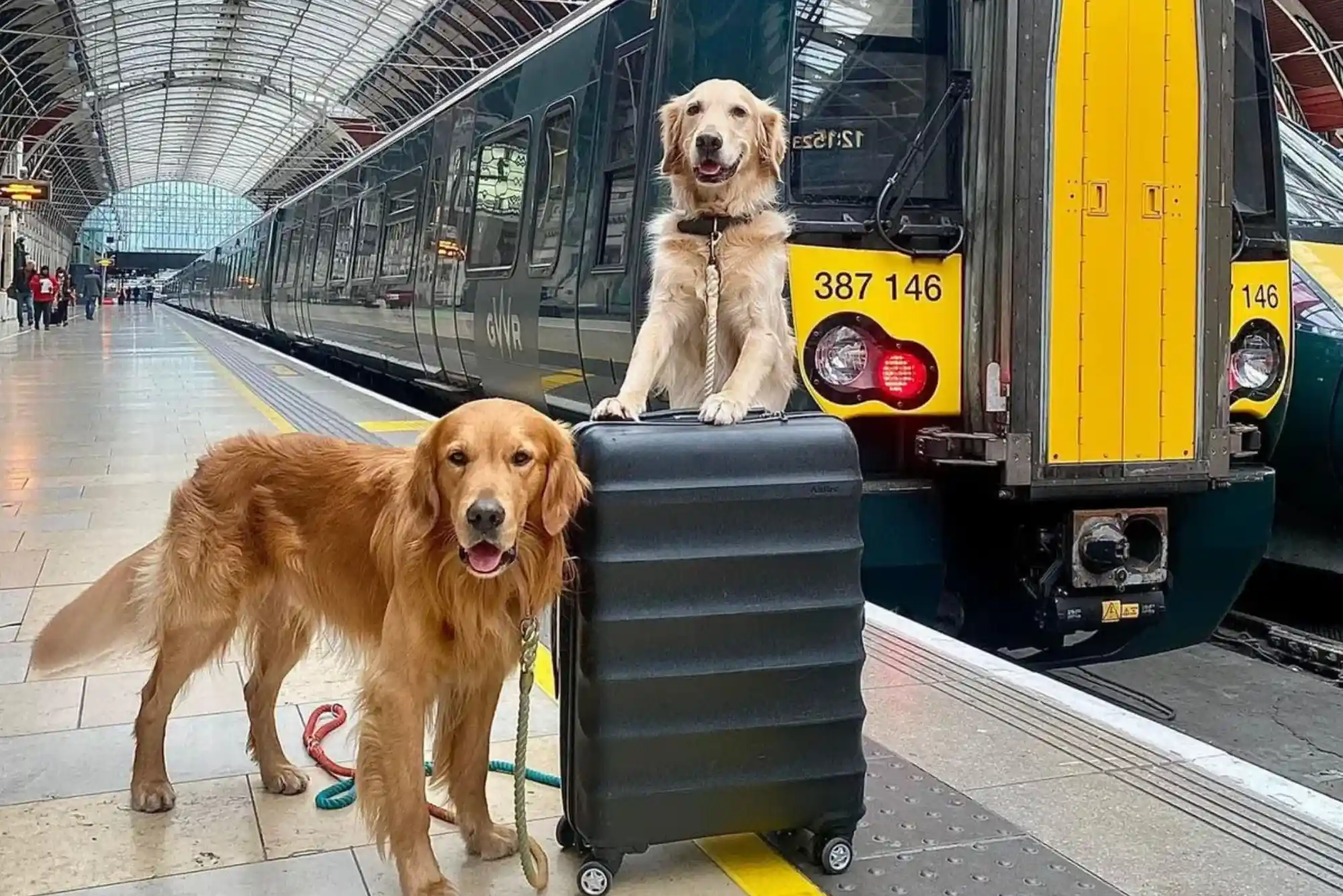
UK rail travel is generally one of the more accommodating options for pet owners. National Rail states that passengers can bring up to two pets free of charge. Dogs, cats, and other small domestic animals are generally covered by the rules.
Dogs must remain on a lead throughout the journey and at stations. Other animals should remain inside an appropriate carrier. Pets are not permitted on passenger seats, whether the passenger is traveling in Standard or First Class.
For animals other than dogs, National Rail’s conditions specify a fully enclosed basket or pet carrier. The maximum stated dimensions are 85 by 60 by 60 centimeters. The carrier must allow the animal to stand and lie down comfortably.
There are also restrictions around restaurant and buffet areas. Ordinary animals generally cannot enter these areas unless the individual train company specifically allows them. Assistance dogs are treated differently.
Some train companies may introduce additional conditions. This is particularly important for sleeper services. Therefore, travelers should check the individual operator when booking an overnight journey.
Amtrak, Eurostar, and UK Rail: Key Differences
The most important difference is accessibility. Amtrak generally focuses on small dogs and cats that can travel inside approved carriers. Its 20-pound combined pet-and-carrier limit and seven-hour journey restriction significantly shape the travel options.
UK rail services provide broader access for ordinary pets. Up to two animals can generally travel without an additional charge, although individual train companies can apply special conditions. Dogs usually travel on leads, while cats and other animals remain contained.
Eurostar requires the most careful route checking. Ordinary pets can travel on certain continental European routes, but ordinary pets are not permitted on Eurostar services to and from London.
Consequently, Pet-Friendly Train Travel: Amtrak, Eurostar, and UK Rail Policies Explained is less about finding one universal rule and more about understanding three different systems.
How to Prepare Your Pet for Train Travel
Good preparation starts several days before departure. Introduce your pet to the carrier gradually instead of using it for the first time at the station. Short practice sessions can help the animal associate the carrier with normal, safe experiences.
Before leaving home, give your pet an appropriate opportunity to toilet. Avoid giving an unusually large meal immediately before travel. Water should remain available according to your pet’s normal needs.
At the station, keep your pet secure and close to you. Crowded platforms, loud announcements, luggage, and unfamiliar smells can be overwhelming. A nervous animal can react unexpectedly, even if it normally behaves calmly at home.
During the journey, follow the operator’s containment rules. Never place a carrier on a passenger seat when the railway prohibits it. Likewise, never remove an animal from its carrier unless the operator’s rules specifically permit it.
It is also worth carrying identification and relevant veterinary documentation. International journeys require additional preparation because border rules can apply independently of the railway’s own pet policy.
What About Service and Assistance Animals?
Service and assistance animals should not automatically be treated like ordinary pets. Different legal and accessibility frameworks can apply.
Amtrak states that service animals meeting applicable requirements are not governed by its ordinary pet policy. This means the standard pet carrier and weight restrictions should not simply be assumed to apply to a qualifying service animal.
Eurostar similarly has separate procedures for guide and assistance animals. On routes between France, Belgium, Germany, and the Netherlands, qualifying assistance animals can travel under specific arrangements. London routes require additional documentation and advance approval.
UK rail services also provide separate treatment for assistance dogs. National Rail states that assistance dogs travel free and are not subject to the standard cleaning charge applicable to some ordinary pet arrangements.
Therefore, passengers should identify their animal correctly when booking. An assistance animal and an ordinary companion pet may have completely different requirements.
Frequently Asked Questions
Can I take my dog on a train in the UK?
Yes. UK rail services generally allow dogs, provided they remain on a lead and do not cause inconvenience to other passengers. Up to two pets can generally travel free, although individual operators may have additional conditions.
Can I take a cat on an Amtrak train?
Yes, eligible Amtrak services generally allow cats in an approved carrier. The combined weight of the cat and carrier must not exceed 20 pounds. The journey is generally limited to seven hours.
Are dogs allowed on Eurostar?
It depends on the route. Ordinary dogs are allowed on eligible continental Eurostar routes between Belgium, France, Germany, and the Netherlands. Ordinary pets are not permitted on Eurostar services to and from London.
Do pets need tickets on trains?
Requirements vary. Amtrak requires a pet reservation and charges a pet fee depending on the route. UK National Rail generally allows up to two pets free. On eligible Eurostar continental services, small pets under 6 kilograms can travel free in an approved carrier, while larger dogs require a specific dog fare.
Can pets sit on train seats?
Generally, no. UK National Rail specifically prohibits animals from passenger seats. Amtrak requires pet carriers to remain in the designated space rather than on seats. Eurostar has separate arrangements depending on the animal and route.
Conclusion
Pet-Friendly Train Travel: Amtrak, Eurostar, and UK Rail Policies Explained shows why preparation matters before every journey. Amtrak offers practical options for small dogs and cats, but its weight, carrier, reservation, and seven-hour restrictions must be followed.
UK rail travel is generally more flexible for ordinary pets. Passengers can usually bring up to two animals free, while dogs must remain on leads and other animals must stay safely contained.