
Introduction
Flying with a dog can be an exciting experience, but it requires careful planning. Every airline has different requirements for pet weight, carrier dimensions, documentation, and cabin travel. Understanding these requirements before booking can help you avoid stressful surprises at the airport.
This guide explains everything you need to know about Flying with a Dog in Cabin: Airline Weight Limits, Pet Crates, and Rules. You will learn how cabin weight limits work, what type of pet carrier you need, and which health and travel rules may apply.
Whether you are travelling for a holiday, relocating, or visiting family, preparation makes the journey safer. You can also explore helpful travel guidance about Flying With Pets before planning your trip.
Understanding Flying with a Dog in Cabin
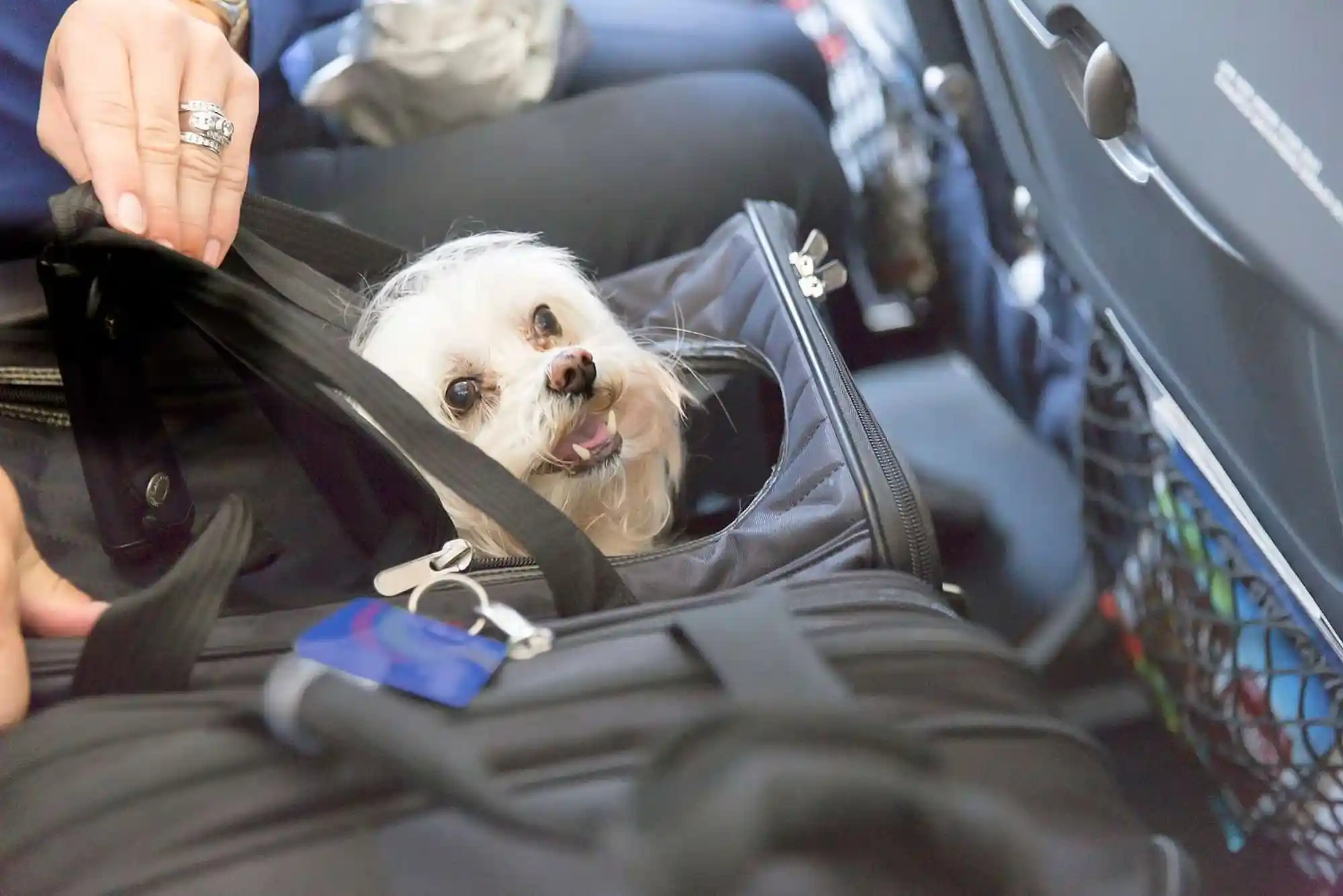
Flying with a dog in the cabin means your pet travels inside an approved carrier under the seat in front of you. This option is generally designed for small dogs that can remain comfortable inside their carrier throughout the flight.
However, airline rules can vary significantly. Some airlines accept dogs in the cabin on domestic flights but restrict them on international routes. Others may allow pets only in certain cabins or aircraft types.
Therefore, always check the airline’s current pet policy before purchasing your ticket. Do not assume that a pet accepted by one airline will be accepted by another.
Most airlines also limit the number of pets allowed in the cabin. As a result, booking early is important. A pet reservation may be required even after you have booked your own ticket.
Why Airline Rules Differ
Airlines establish pet policies based on aircraft design, safety requirements, destination regulations, and available space. The under-seat area differs between aircraft models.
For this reason, an approved carrier size on one flight may not work on another aircraft.
Some destinations also have strict animal import requirements. These may involve vaccinations, health certificates, microchips, or additional permits.
Understanding Flying with a Dog in Cabin: Airline Weight Limits, Pet Crates, and Rules can help you prepare for both the airline and your destination.
Airline Weight Limits for Dogs in the Cabin
Weight limits are one of the most important issues for pet travellers. Many airlines consider the combined weight of your dog and carrier.
The permitted limit varies by airline. Some airlines focus primarily on carrier dimensions instead of a strict combined weight. Others enforce a maximum weight for the pet and carrier together.
A small dog may still be refused if the carrier is too large or cannot fit safely beneath the seat.
Combined Weight Matters
Before travelling, weigh your dog while inside the carrier you plan to use. This gives you a more realistic measurement.
Do not rely only on your dog’s body weight. Food, blankets, absorbent pads, and the carrier itself can add extra weight.
It is also important to consider your dog’s comfort. Meeting a weight requirement does not automatically mean your dog has enough space.
Your pet should be able to lie down naturally and adjust its position. The carrier should not force your dog into an uncomfortable posture.
Check Your Specific Flight
Airline policies can change depending on the route and aircraft. A flight operated by a partner airline may also follow different rules.
Therefore, confirm the pet requirements for every flight segment.
This is especially important when connecting through another country. Transit airports may have separate animal regulations.
For reliable general travel information, travellers can visit FAA Pet Travel Regulations and review relevant aviation guidance before departure.
Choosing the Right Pet Crate or Carrier
A suitable pet carrier is essential when flying with a dog in the cabin. The carrier must normally fit underneath the seat in front of you.
Soft-sided carriers are often popular because they can fit more easily into slightly restricted spaces. However, the carrier must still remain secure and structurally stable.
Hard-sided carriers may also be accepted, depending on the airline. Their fixed dimensions can make them less flexible for under-seat storage.
Features of a Good Cabin Pet Carrier
A quality carrier should provide proper ventilation and secure closures. Your dog should not be able to escape during the flight.
The base should also be leak-resistant. Accidents can happen, particularly during long journeys.
Absorbent bedding or pads can help keep the carrier clean and comfortable. Avoid placing too many items inside because excess materials can reduce your dog’s available space.
The carrier should also have a secure identification label. Include your contact information according to airline recommendations.
Measuring the Carrier Correctly
Measure the length, width, and height of the carrier before travelling. Compare these measurements with the airline’s official limits.
Remember that airline websites may show maximum dimensions, but actual under-seat space can vary.
A carrier that exactly matches the published maximum size may still be difficult to position on some aircraft.
For this reason, choosing a slightly flexible soft-sided carrier may provide additional convenience. Nevertheless, always prioritise safety and your dog’s comfort.
Health Requirements Before Flying
Airlines and destination countries may require health documentation before accepting your dog.
Common requirements can include proof of vaccination, veterinary health certificates, and identification records.
International travel can involve additional requirements. Some countries have strict rules concerning rabies vaccinations and microchips.
These rules may also depend on where your journey begins.
Visit Your Veterinarian Early
Schedule a veterinary appointment well before your departure date. This gives you time to complete any required vaccinations or documentation.
Waiting until the last minute can create problems. Some vaccinations must be completed within a specific period before travel.
Your veterinarian can also assess whether air travel is appropriate for your dog.
Dogs with certain health conditions may face additional risks during travel. Very young, elderly, or highly anxious pets may require special consideration.
Never give sedatives without professional veterinary advice. Medication can affect a dog’s breathing, balance, and overall response during travel.
Airport Check-In Rules for Dogs
Flying with a dog usually requires arriving earlier than normal. Pet check-in procedures can take additional time.
Airline staff may inspect the carrier and verify your documentation. They may also confirm that your dog meets the airline’s size requirements.
Some airlines require pet travellers to check in at the airport counter rather than using online check-in.
Security Screening Procedures
Airport security procedures can vary. In many cases, you may need to remove your dog from the carrier while the carrier passes through screening equipment.
Keep your dog securely controlled during this process. A harness and lead can provide additional security.
However, follow the instructions provided by security personnel.
If your dog is nervous, tell the staff before screening begins. They may explain the safest procedure for handling your pet.
Planning ahead is an important part of Flying with a Dog in Cabin: Airline Weight Limits, Pet Crates, and Rules.
Preparing Your Dog for the Flight
A successful flight often begins days or weeks before departure. Your dog should become familiar with the carrier before travel day.
Place the carrier in your home and allow your dog to explore it voluntarily. Add familiar bedding when appropriate.
Short practice sessions can help your dog become comfortable spending time inside.
Gradually increase the amount of time your dog spends in the carrier. Never use the carrier as punishment.
Exercise Before Departure
Give your dog appropriate exercise before travelling to the airport. A calm walk can help your pet release energy.
However, avoid excessive activity immediately before a long journey.
Give your dog enough time for a toilet break before entering the terminal.
Many airports have designated pet relief areas. Check the airport layout in advance so you know where these facilities are located.
Food and Water Considerations
Avoid making major changes to your dog’s normal diet before travelling.
Offer water according to your dog’s needs and veterinary guidance. However, consider the practical limitations of airport procedures and the flight duration.
A spill-proof water solution may be useful before boarding.
Do not overfeed your dog immediately before departure. A very full stomach may increase discomfort during travel.
Rules During the Flight
Once the aircraft doors close, airline staff may require your dog to remain inside the carrier.
The carrier is generally placed beneath the seat in front of you.
Do not remove your dog simply because the flight is calm. Cabin rules are designed to protect passengers, crew, and animals.
Your dog should remain contained unless airline staff provide specific instructions.
Keep Your Dog Calm
Speak quietly and calmly if your dog becomes unsettled. Familiar scents can also provide reassurance.
Avoid opening the carrier unnecessarily.
A nervous dog may attempt to escape if the carrier is opened in an unfamiliar environment.
Choose a carrier with adequate ventilation so your dog can breathe comfortably throughout the journey.
International Travel and Destination Rules
International pet travel requires more preparation than many domestic flights.
The airline’s approval is only one part of the process. Your destination country may have completely separate entry requirements.
Some countries require advance approval before arrival. Others may impose quarantine or refuse entry if documentation is incomplete.
Research these requirements through official government sources.
Connecting Flights Need Extra Attention
A connecting journey can involve multiple airlines, airports, and countries.
Check whether each airline accepts your dog in the cabin. Also confirm whether your connection requires passing through immigration or customs.
Even a short transit can create complications when international animal regulations apply.
This is why detailed preparation is essential for Flying with a Dog in Cabin: Airline Weight Limits, Pet Crates, and Rules.
Common Mistakes to Avoid
One common mistake is booking a flight before confirming pet availability. Airlines often limit the number of animals allowed in the cabin.
Another mistake is buying a carrier without checking the airline’s dimensions.
Travellers also sometimes forget that connecting airlines may have different rules.
Do not assume your dog’s previous travel experience guarantees approval on a new flight.
Documentation requirements can also change. Always verify the latest requirements shortly before departure.
For more practical travel resources and destination guidance, visit Travelscoach and explore useful information for planning smoother journeys.
How Much Does It Cost to Fly with a Dog in Cabin?
The cost of travelling with a dog varies by airline and route.
Many airlines charge a separate pet travel fee. The amount may differ between domestic and international flights.
Pet fees are usually not included in your standard ticket price.
Ask whether the fee applies to each flight segment. A connecting journey may involve additional charges.
You should also consider other costs, including veterinary appointments, health certificates, vaccinations, and travel equipment.
Planning these expenses early can prevent unexpected costs.
Frequently Asked Questions
What size dog can fly in the cabin?
Generally, a dog must be small enough to travel comfortably inside an approved carrier under the seat. Airlines may also have combined weight restrictions.
Can I take my dog out of the carrier during a flight?
Usually, no. Most airlines require pets to remain inside their carrier during the flight unless crew members give different instructions.
Do dogs need a health certificate to fly?
Requirements vary by airline and destination. Domestic and international flights may require different veterinary documents.
How early should I book a flight with a dog?
Book as early as possible. Airlines often limit the number of pets permitted in the cabin.
Can my dog sit on my lap during the flight?
In most cases, no. Cabin pets are generally required to remain inside their approved carrier beneath the seat.
What happens if my pet carrier is too large?
The airline may refuse the carrier for cabin travel. You could face alternative transport arrangements or be unable to travel as planned.
Conclusion
Flying with your dog can be manageable when you understand the requirements before departure. Airline weight limits, carrier dimensions, health documents, and destination regulations all matter.
The most important step is confirming the specific rules for your airline and flight. Never rely on general advice alone because policies can change.