
For thousands of international professionals, the H1B visa remains one of the most important pathways to building a career in the United States. Yet while attention often focuses on lottery selection rates and sponsorship opportunities, one practical question continues to dominate conversations among applicants and employers alike: how much does the H1B process actually cost before 2026?
The answer is no longer as simple as a single filing fee. Over the past few years, the overall H1B visa price structure has evolved significantly due to USCIS fee adjustments, employer compliance requirements, fraud prevention measures, and optional premium processing services. Depending on the size of the sponsoring company and the complexity of the petition, the total cost can vary from a few thousand dollars to well over ten thousand.
For applicants planning ahead and businesses preparing recruitment budgets, understanding the updated H1B visa price before in 2026 is essential. This guide breaks down the current fee structure, explains who pays what, and highlights the additional expenses many applicants overlook during the process.
Why H1B Visa Costs Have Increased in Recent Years
The H1B program has become more compliance-driven than ever before. U.S. immigration authorities have introduced stricter scrutiny to prevent fraudulent applications and ensure employers meet wage and labor obligations. As a result, filing costs have steadily increased.
Another major factor is administrative modernization. USCIS has expanded digital processing systems, introduced revised registration procedures, and increased operational funding through updated fee schedules. According to the official USCIS website, many immigration filing fees were adjusted to reflect rising administrative expenses and processing demands.
At the same time, premium processing has become increasingly popular among employers looking to secure faster decisions in a highly competitive hiring market. This optional service alone can significantly increase the overall H1B visa price.

The Updated H1B Visa Fee Structure Before 2026
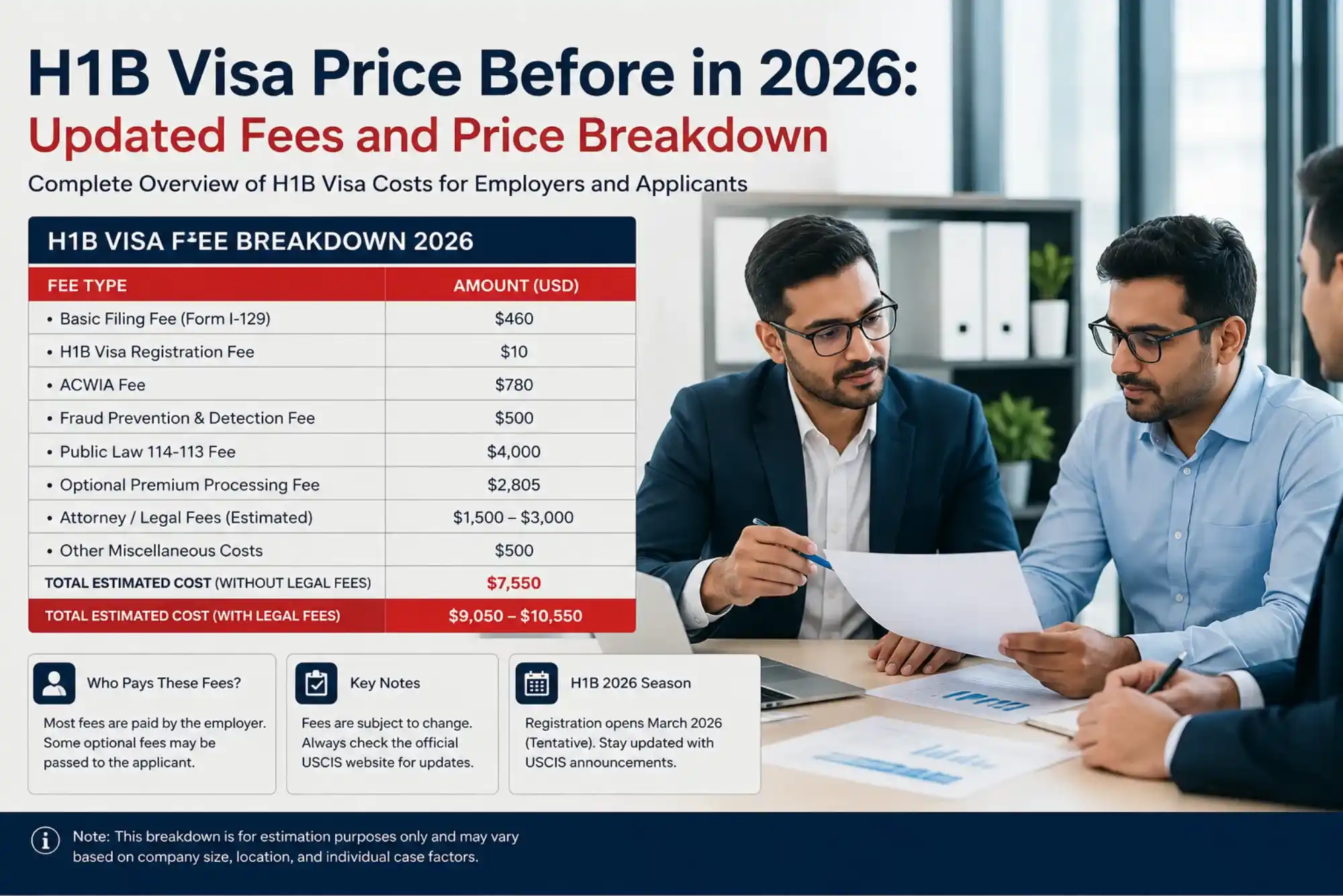
Although exact costs can differ depending on employer size and legal representation, the core filing structure remains relatively standardized.
| Fee Type | Estimated Cost (USD) | Who Pays |
|---|---|---|
| USCIS H1B Registration Fee | $215 | Employer |
| Basic Form I-129 Filing Fee | $780 | Employer |
| ACWIA Training Fee | $750–$1,500 | Employer |
| Fraud Prevention and Detection Fee | $500 | Employer |
| Public Law 114-113 Fee (if applicable) | $4,000 | Employer |
| Premium Processing (Optional) | $2,805 | Employer or Employee |
| Attorney Fees | $1,500–$5,000 | Usually Employer |
| Visa Stamping & Consular Costs | $205+ | Applicant |
These figures represent the most common expenses associated with filing an H1B petition before 2026. However, the actual total can increase further when relocation, credential evaluations, document translations, or dependent visas are involved.
Who Legally Pays the H1B Visa Fees?
One of the most misunderstood parts of the H1B process involves fee responsibility. U.S. labor laws prohibit employers from shifting certain mandatory costs onto employees. Specifically, the employer is generally required to cover core filing expenses tied directly to labor certification and petition submission.
This includes:
- Registration fees
- Fraud prevention fees
- ACWIA training fees
- Standard petition filing costs
Optional services such as premium processing may sometimes be paid by the employee, especially when expedited approval is requested for personal reasons. However, employers often absorb this cost as well to accelerate onboarding timelines.
Applicants should remain cautious when dealing with agencies or recruiters demanding reimbursement for mandatory employer fees. Such arrangements may violate U.S. labor regulations.
How Employer Size Changes the Total Cost
The size of the sponsoring organization plays a direct role in determining the final H1B visa price before in 2026. Smaller employers typically pay lower workforce training fees, while larger corporations can face significantly higher obligations.
For example, companies with fewer than 25 full-time employees generally pay the lower ACWIA fee tier of $750. Employers exceeding that threshold must usually pay $1,500.
Certain businesses also fall under additional scrutiny if a large percentage of their workforce holds H1B or L1 visas. In these situations, the extra $4,000 Public Law fee may apply, dramatically increasing overall sponsorship costs.
This explains why multinational consulting firms and technology outsourcing companies often spend millions annually on immigration compliance alone.
Premium Processing: Is the Extra Cost Worth It?
Premium processing has transformed from a luxury service into a strategic necessity for many employers. The service guarantees expedited case review within a limited processing timeframe, reducing uncertainty for both businesses and applicants.
Without premium processing, H1B petitions may take several months to receive final decisions depending on case volumes and seasonal backlogs. For employers hiring critical talent, these delays can disrupt project schedules and workforce planning.
In competitive industries such as technology, engineering, healthcare, and finance, companies frequently choose premium processing despite the additional cost. Faster approvals can help employers secure talent before candidates accept alternative offers elsewhere.
For workers navigating tight relocation timelines or expiring visa statuses, the additional fee may provide valuable peace of mind.
Hidden Costs Many Applicants Forget to Budget For
While official filing fees receive the most attention, several secondary expenses can quietly increase the total financial burden of the H1B process.
Travel expenses are one major factor. Applicants often need to attend visa interviews at U.S. consulates in their home countries, which can involve transportation, accommodation, and document preparation costs.
Credential evaluations may also become necessary for foreign degrees. Some employers request professional educational assessments to confirm U.S. equivalency standards.
Additional costs can include:
- Passport renewals
- Document translations
- Medical examinations
- Dependent H4 visa applications
- Relocation and housing deposits
Professionals planning long-term relocation should build financial flexibility into their immigration plans rather than focusing only on USCIS filing fees.
The Growing Financial Pressure on Employers
For businesses, H1B sponsorship is no longer simply a hiring expense — it has become a long-term investment decision. Beyond visa filing costs, employers must comply with prevailing wage requirements, maintain labor condition documentation, and prepare for potential audits.
As competition for global talent intensifies, many organizations still view H1B sponsorship as essential despite rising costs. Specialized sectors facing domestic skill shortages continue to rely heavily on international recruitment.
Interestingly, discussions around workforce mobility and international recruitment are increasingly appearing across broader business and travel platforms. Articles covering global employment trends and relocation planning, such as those found in the business section of Travels Coach, reflect how interconnected immigration, travel, and international careers have become.
Will H1B Visa Fees Increase Again Before 2026?
Immigration policy in the United States continues to evolve alongside economic and political priorities. While no one can predict future fee changes with complete certainty, many analysts expect additional adjustments before or during 2026.
USCIS periodically reviews operational funding needs, and immigration backlogs remain a major administrative challenge. Future reforms could potentially increase premium processing fees further or introduce additional compliance-related charges for employers.
The best strategy for applicants and sponsoring companies is preparation. Monitoring updates through official government sources like the U.S. Department of State helps avoid surprises during filing season.
For international workers planning relocation timelines, budgeting early is particularly important. Visa-related costs often arrive in stages, and unexpected delays can create additional travel and accommodation expenses.
How International Professionals Are Planning Smarter
Today’s H1B applicants are approaching the process with far more financial awareness than in previous years. Instead of viewing sponsorship as a simple paperwork procedure, professionals increasingly understand the broader economic realities behind employment-based immigration.
Many candidates now compare employer sponsorship packages carefully, paying close attention to which costs are covered and whether relocation assistance is included. Others are researching living costs, housing markets, and transportation logistics well before visa approval.
This shift mirrors broader travel and relocation planning trends seen across international mobility platforms. Even practical guides unrelated to immigration — from budget-friendly travel planning in Zurich to destination-focused relocation content — highlight how financial preparation has become central to global mobility decisions.
Final Thoughts on H1B Visa Price Before in 2026
The H1B visa remains one of the most valuable employment pathways for international professionals seeking opportunities in the United States. However, the process now carries a more substantial financial commitment than ever before.
Understanding the updated H1B visa price before in 2026 is not just about knowing individual filing fees. It requires a broader understanding of employer obligations, premium processing decisions, hidden relocation expenses, and evolving immigration policies.
For employers, strategic workforce planning and compliance budgeting are becoming increasingly important. For applicants, early preparation and realistic financial expectations can make the transition far smoother.
As immigration systems continue evolving, staying informed through official government channels and credible industry resources will remain essential for anyone navigating the H1B journey in the years ahead.
FAQs
What is the minimum H1B visa filing cost before 2026?
For smaller employers, the minimum mandatory filing cost is typically around $2,000 to $3,000 before legal and optional processing fees are added.
Can employees pay for their own H1B visa fees?
Certain optional expenses may be paid by employees, but core employer filing fees generally cannot legally be transferred to the worker.
How much is premium processing for H1B visas?
The premium processing fee is currently approximately $2,805 and provides expedited USCIS review.
Do attorney fees increase total H1B costs significantly?
Yes. Legal fees often range between $1,500 and $5,000 depending on case complexity and the law firm handling the petition.
Will H1B visa prices rise again after 2026?
Future increases are possible as USCIS periodically reviews operational funding and immigration processing requirements.
Related Reading: India to Pakistan Visa Price in 2026: Updated Fees and Price Breakdown